Dr. Eric Brown Advances Public Health Education Through Mentorship and Innovation
The professor and doctoral program director was recognized for contributions spanning teaching, curriculum development, program leadership and student mentorship.
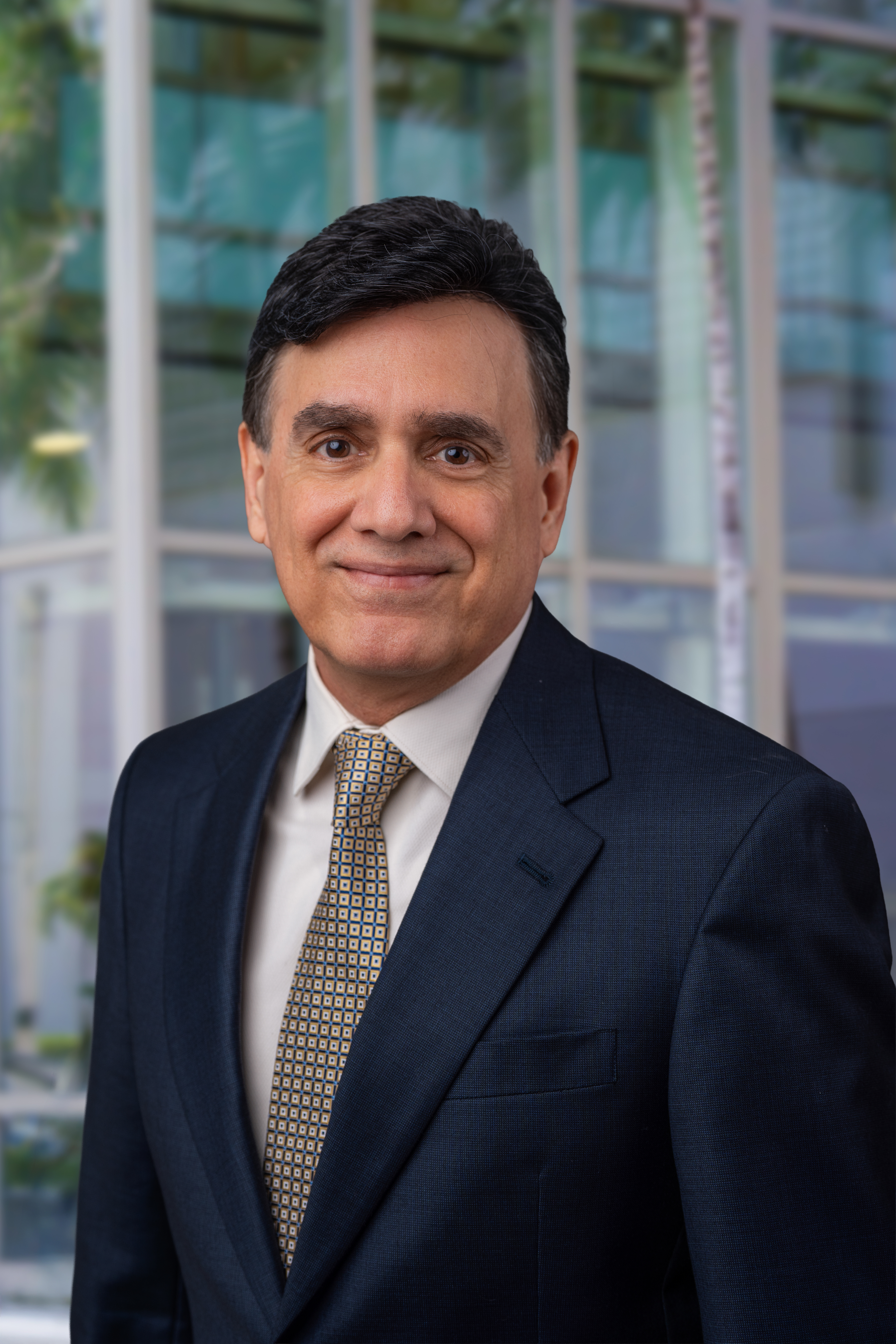
Dr. Eric C. Brown.
For Eric C. Brown, M.A., Ph.D., effective public health education begins with recognizing that every student learns differently.
“‘One size does not fit all,’” Dr. Brown said. “Tailoring the educational experience of our students to a student’s learning style should be a priority.”
That philosophy has guided his work during more than a decade in the Department of Public Health Sciences at the University of Miami Miller School of Medicine. A professor of professional practice and director of the Ph.D. Program in Prevention Science and Community Health, Dr. Brown has taught or directed approximately 1,500 students across the department’s graduate programs.
His contributions were recently recognized with the FY26 Recognition of Educational Contribution Award from UHealth – University of Miami Health System and the Miller School. The annual recognition honors the quantity, quality and impact of faculty contributions to teaching, curriculum development, mentoring, educational leadership and educational scholarship.
Building Programs and Expanding Learning
Dr. Brown joined the University of Miami in 2014. He served as founding director of the M.S. Program in Prevention Science and Community Health from 2018 to 2020 before becoming director of the doctoral program in 2021.
His teaching has reached students in the department’s M.S., M.S.P.H., M.P.H., accelerated 4+1, Ph.D. and M.D./M.P.H. programs. His current courses address disease prevention and health promotion, dissemination and implementation science, and advanced research methods.
Dr. Brown also teaches in the Online M.P.H. program and is developing instruction for the new M.S. Program in Implementation Science. Creating courses for both online and in-person students has encouraged him to reconsider how complex ideas are introduced and reinforced.
“The development of courses for both online and residential programs required a new way of thinking about giving lectures and conveying information,” Dr. Brown said. “Instruction now requires more frequent and brief messaging of concepts, with the delivery having to be very clear and highly engaging.”
He is also working with doctoral student Filip Serban to explore how artificial intelligence can give students opportunities to apply and practice concepts introduced in class. The University of Miami Academy of Medical Education Scholars previously provided support for that work.
Beyond the classroom, Dr. Brown has contributed to the department’s academic infrastructure. He established the M.S. Program in Prevention Science and Community Health, creating a connection between the division’s master’s and doctoral education. He also led the doctoral program’s comprehensive self-study process.
Making Mentorship Personal
As doctoral program director, Dr. Brown works closely with students and gathers ongoing feedback about their academic experiences. That communication allows the program to address gaps, reinforce successful approaches and make adjustments while students progress through their training.
He credits the combined efforts of faculty, administrators and mentors with helping students secure fellowships, National Institutes of Health funding and university appointments. He also points to the doctoral program’s student publication record and time to degree as indicators of its strength.
“Our department’s attention to teaching and our personalized approach to mentoring our students really makes a difference,” Dr. Brown said. “We have great leadership, both academic and administrative, and that is key to the success of our students.”
Receiving the educational contribution award, he said, affirms work that has been central to his career.
“It means a great deal,” Dr. Brown said. “It is nice to be recognized for this effort. I am appreciative of my educator-track colleagues for their guidance and support.”
Preparing for the Future of Education
Dr. Brown sees opportunities to make public health education more interactive by combining focused instruction with discussion and activities that allow students to apply what they are learning.
Although he does not expect traditional lectures to disappear, he believes artificial intelligence and other emerging tools will increasingly shape how students engage with course material.
“There are a lot of challenges to our educational mission, but there are also a lot of opportunities for taking education to a whole new level,” Dr. Brown said.
Becoming an educator has been a goal since he completed his degree at the University of South Florida’s College of Education. At the Miller School, he has found the opportunity to pursue that goal while helping prepare students to advance prevention science and public health.
“I’m happy for the opportunity to fulfill this goal at the University of Miami’s Department of Public Health Sciences,” Dr. Brown said.
Written by Deycha Torres Hernández, published September 24, 2026.